Here is my GST-1, hereafter described as the Hexacaster.
This is a build of a GST-1 kit for a friend of mine, Steve, who's very into MIDI guitars and plays them live in a prog band. He wanted another guitar equipped with a MIDI pickup with internal controls as a backup guitar, in case his main MIDI guitar broke a string etc. I wasn't keen on trying to mod one of his existing guitars, so I said it would be much easier to build one from a kit, hence the GST-1 with a Roland GK-KIT-GK3 installed, and named 'Hexacaster' named after the hex pickup fitted.
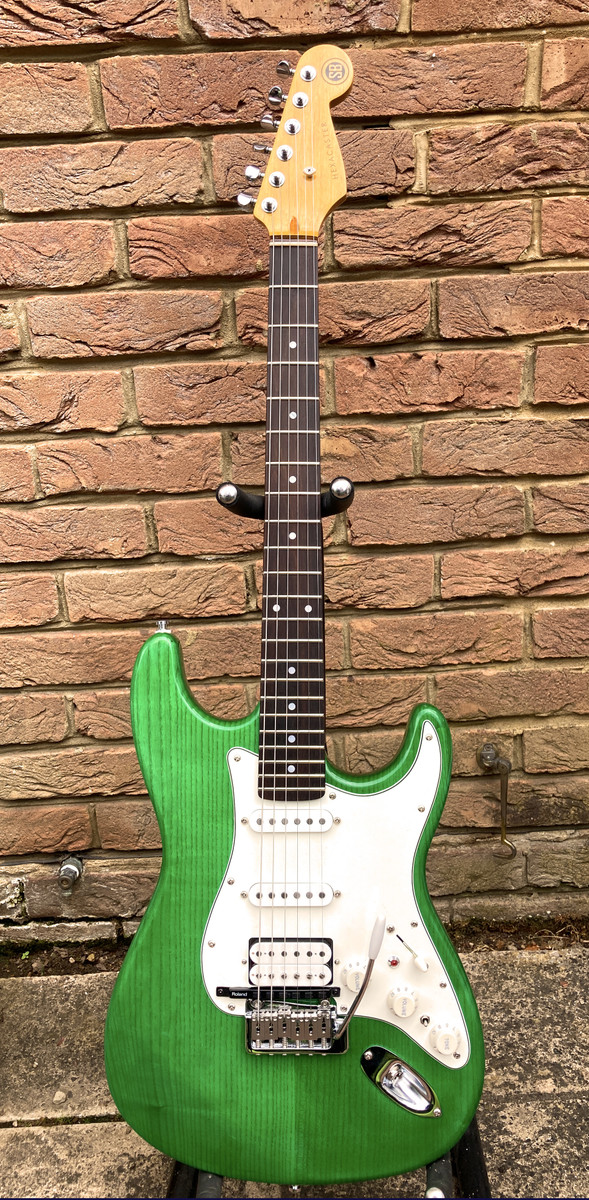
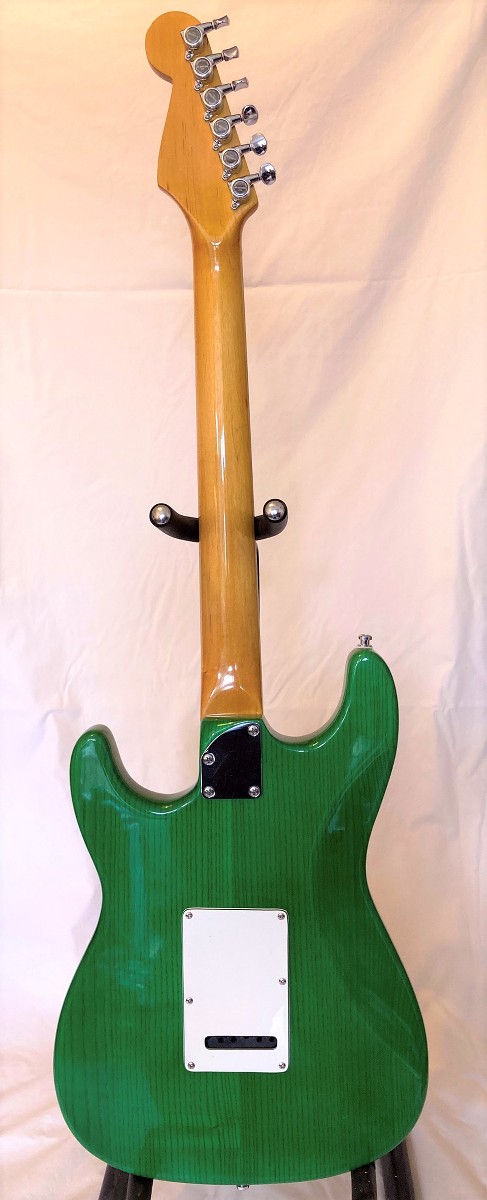
It's finished in sprayed nitro, with a slight amber tint neck lacquer with clear lacquer over that, with the body being finished in an emerald green tinted clear lacquer, with clear over the top of that.
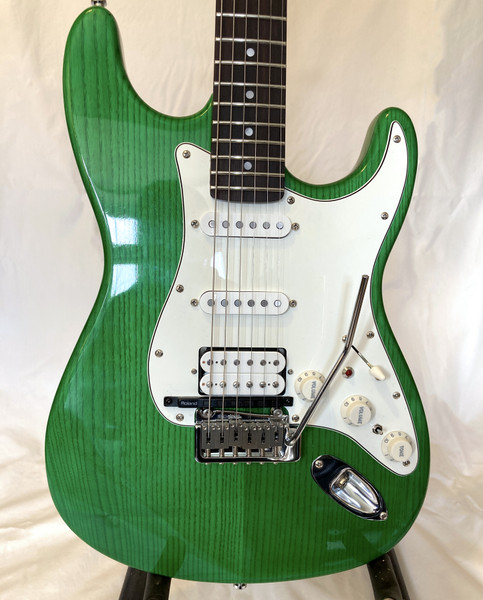
Basic front and back pictures:
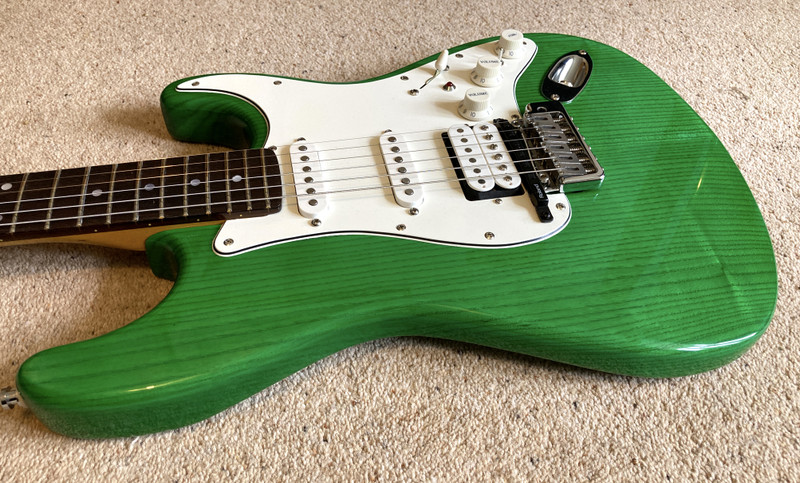
Side view showing the 13-pin GK connector. The 13 wires carry the six individual hex pickup outputs, the standard guitar signal, power and various control signals, to/from the guitar synth unit. The standard guitar jack can be used, and it has a switching jack to disconnect the guitar signal from the GK unit if the guitar is being used just as a guitar, to stop the input impedance of the GK board from loading the pickups and dulling the sound slightly:
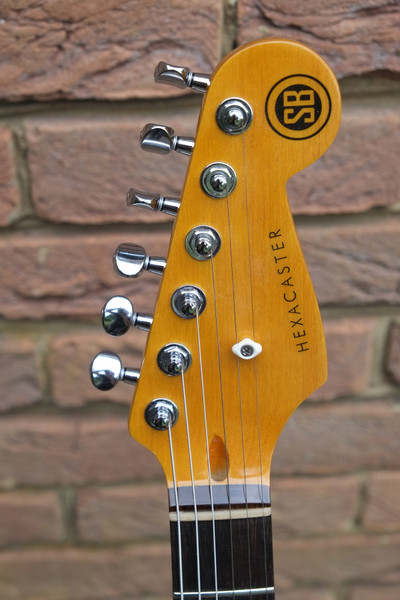
The Hexacaster headstock. Graphtech string tree and camel bone nut:
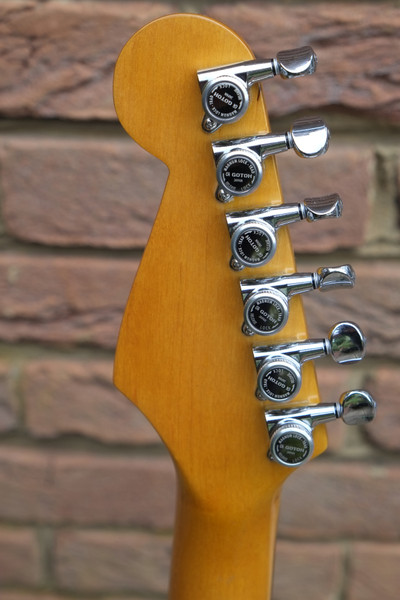
Rear of the headstock showing the Gotoh SG381 locking tuners. These have a great 16:1 gear ratio:
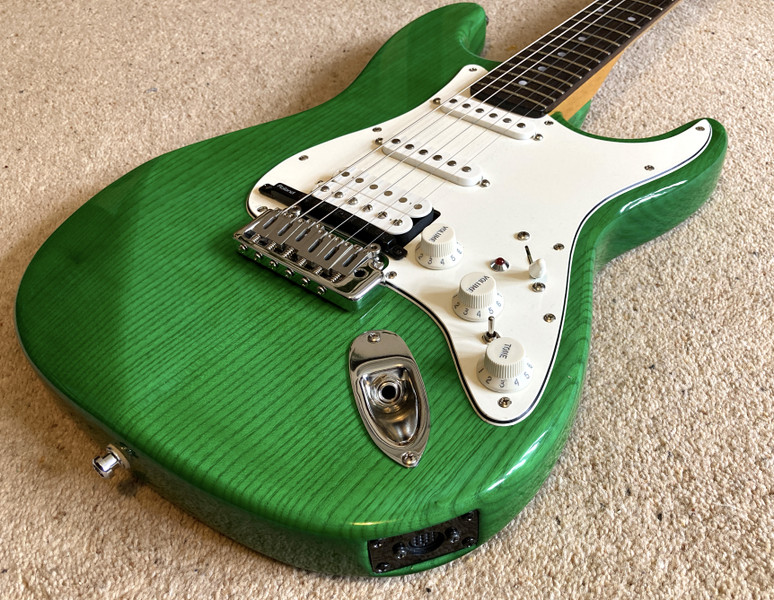
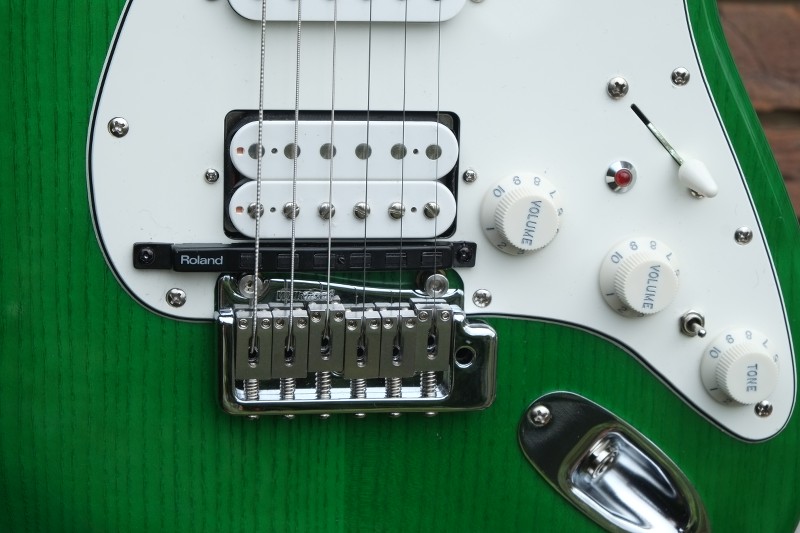
Now for all the interesting bits. Two Bare Knuckle True Grit Boot Camp single coils and a Tonerider Rocksong bridge humbucker. The Roland GK hex pickup. Two volume knobs and a standard passive tone control. It's quite a bright guitar, with the Rocksong a good fit for the two medium-hot BKs, with not a huge jump in output or difference in tone when switching from single coils to the humbucker.
The volume nearest the humbucker is a 500k Bourns audio taper push/pull switched pot, with the switching splitting the bridge humbucker. There is a treble bleed (cap and resistor in series) wired across the volume pot.
The middle knob is the GK synth volume (50k linear), which sends a variable output signal to the synth unit, and doesn't lower the hex pickup signal at all.
The common tone control (on all pickups) is a 250k Bourns audio taper push/pull switched pot, with the 'up' position swapping from GK + guitar to GK signal only out on the 13-pin connector. The tone capacitor is a 0.022uF orange drop.
The LED shows the GK preamp board inside the guitar is receiving power from the synth and reassure the user that they have plugged the lead in and it hasn't fallen out. The mini toggle switch is a sprung-loaded-to-centre momentary contact switch, and sends out signals that can be set up in the synth controller to do things like increase/decrease patch selection values or turn effects on and off, though it does depend on the synth controller as to what it can be programmed to do. On some older Roland/Boss modules, the function is fixed.
The CRL 5-way switch has one side dedicated to the pickup selection, whilst the other brings in a 470k resistor in parallel with the volume pot when either of the two single coils are selected.
The bridge is a two-point Wilkinson trem, with steel saddles and a steel block. There is both the standard-sized trem arm and a reduced-sized trem arm à la Gilmour, you can see both fitted in various photos.
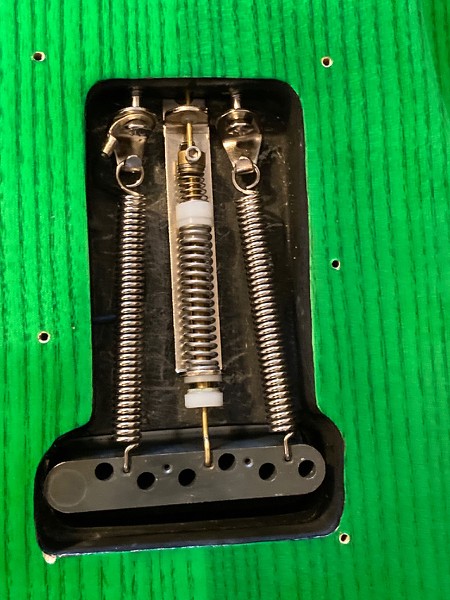
In the trem cavity are two springs and a Hipshot Tremsetter unit, which keeps the trem remarkably stable and under control. The cavities are graphite paint shielded, and this was carried over into the trem cavity for neatness:
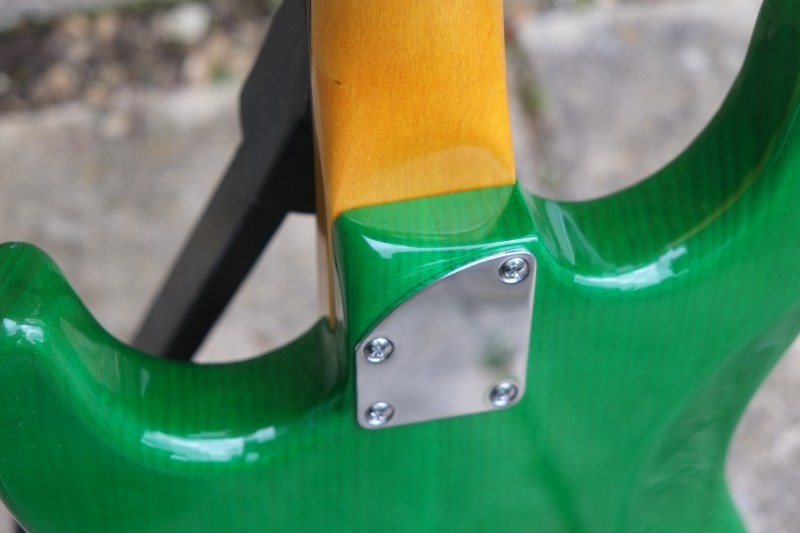
The cutaway heel and rounded neck plate. The neck shape was modified so that there was a minimal flat section poking out from the heel joint and a much more gradual transition to the joint:
A player's view of the Hexacaster. You can see the far more gradual neck to heel transition with no step quite well:
And here is a photo showing the standard trem arm fitted:
Here's a very rough video showing Steve trying out the guitar on the day he picked it up. He's testing, rather than demonstrating, so note that it's not the most exciting demo in the world. He runs through some synth patches, then some hex pickup processed sounds e.g. nylon string and steel string acoustics) before moving to the straight guitar sounds.
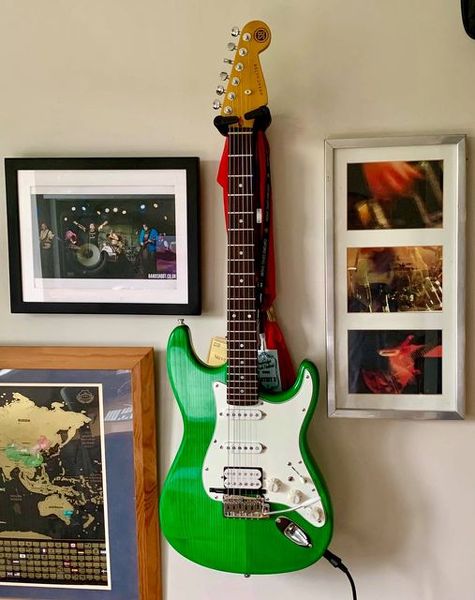
And to finish off, a photo of it hanging proudly on Steve's wall. Apparently rather than be a backup guitar, it will probably replace his Brian Moore as his main MIDI guitar. Which is nice :


:



 Reply With Quote