
yeah Z , I saw yours with the dingostain. Nice!! I'm determined to do a stain/lacquer job on this one and it has some pretty deep grain on the veneer, which I know is pretty thin ( .5mm )


yeah Z , I saw yours with the dingostain. Nice!! I'm determined to do a stain/lacquer job on this one and it has some pretty deep grain on the veneer, which I know is pretty thin ( .5mm )

As Zandit says, you don't need to grain fill the top. Maple has a closed pore grain structure (unlike something like mahogany) so doesn't need filling to stop it soaking up the finish in an uneven manner. But sometimes the thin veneer splinters slightly at the edges - mainly on the end grain. So look at the top where it meets the binding around the heel and neck and you may notice areas that aren't smooth. If not, great. But if there are a few small rough areas in the veneer, then I'd just grain fill these areas. It's a lot less work for a start!
But the mahogany body and neck will need to be grain filled. You have the option of using a neutral filler and then staining, or you can use a coloured grain filler (or neutral with some stain added) to combine this operation. Gibson have used a number of different tints over the years, from cherry red to a dark brown, but you may want to go with something completely different.
Try and find a water-based grain filler. A lot are naptha or mineral oil based which don't take stains well (most act like a varnish and seal the surface). Stewart Macdonald, the best known US luthier supplier ( http://www.stewmac.com/?gclid=CjwKEA...sxXBoCGKfw_wcB ) sell a water-based grain filler, or you can try and find a product called Timbermate - which is Australian and used by most folks here, but I know it's available in the UK.
As you are staining, you won't want to use a sanding sealer first. Grain fill the top (if necessary) and sand smooth - a maximum of 240 grit, and maybe a quick drag over with 320 grit. The mahogany body and neck will need to be grain filled and stained. It's recommended that you do the grain filling exercise twice on the body and neck (but not the top unless it really needs it) to get it really smooth.
Make sure you let everything dry for a couple of days after staining. You don't want to trap moisture under your clear coats.
Note that if you plan to paint the headstock face black or another solid colour rather than stain it, then just grain fill it, then maybe a couple of clear coats to seal it which are then rubbed flat and then spray the headstock the solid colour.
Then you can start on your clear coats.

Thanks Simon,
You need to change your name to St. Simon Barden for passing on your knowledge from the ether to the uninitiated.
I did get a grain fill and did some of the deep gouges on the top and sanded with 320 ( i'm afraid to sand through ) which is a little light but I'm going to try to do a Pheonix type stain job. ( ColorTone filler/stain from Stewmac ) Light brown, cherry red, orange and yellow in the design of a Phonix and sand it down just to see so i hope the light filler will give it a nice effect. i don't care if i screw it up cause this one is for me and as long as it puts together well ( little nervous about the glue on neck ) and plays well I am cool with it.
Thanks for the 411 on the body ( 411 is slang for info across The Pond ) I was actually about to stain it with a light brown / cherry mix in denatured alcohol but logged on to check the blog. Going to brush on a couple of coats of grain filler and sand,,,,and sand.... and sand.
Anyway man, thanks for all your knowledge. I don't care what the other Luthiers say.
Last edited by Garz666; 22-01-2017 at 02:36 PM.
So....also a graphic artist of sorts I want to do a Phoenix type stain to the body.... Should I go with a traditional Les Paul headstock or something different?

Hey Garz, all depends what headstock shape you want. If you can post a pic of the rough shape what the graphics look like we might be able to recommend a headstock shape.
Current Builds and status
scratch end grain pine tele - first clear coat on !
JBA-4 - assembled - final tweaks
Telemonster double scale tele - finish tobacco burst on body and sand neck
Completed builds
scratch oak.rose gum Jazzmaster - assembled needs setup
MK-2 Mosrite - assembled - play in
Ash tele with Baritone neck - neck pup wiring tweaks and play in
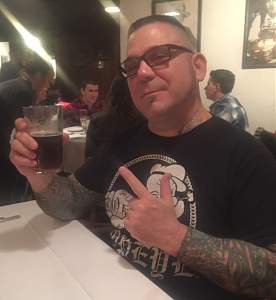
who wants a Pint?
i drew in with a pencil....probably going for a gibson or epiphone though
looks good so far Garz. What type of beer you drinking ?
Current Builds and status
scratch end grain pine tele - first clear coat on !
JBA-4 - assembled - final tweaks
Telemonster double scale tele - finish tobacco burst on body and sand neck
Completed builds
scratch oak.rose gum Jazzmaster - assembled needs setup
MK-2 Mosrite - assembled - play in
Ash tele with Baritone neck - neck pup wiring tweaks and play in
Any good IPA or Stout, Double Bock even....
 Posting Permissions

 Reply With Quote